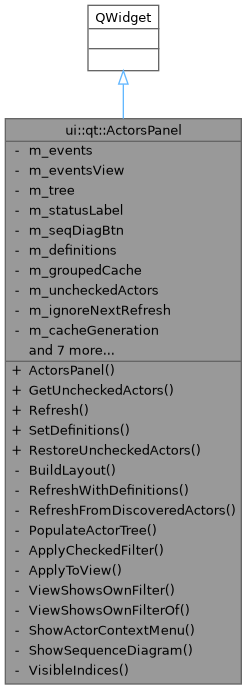
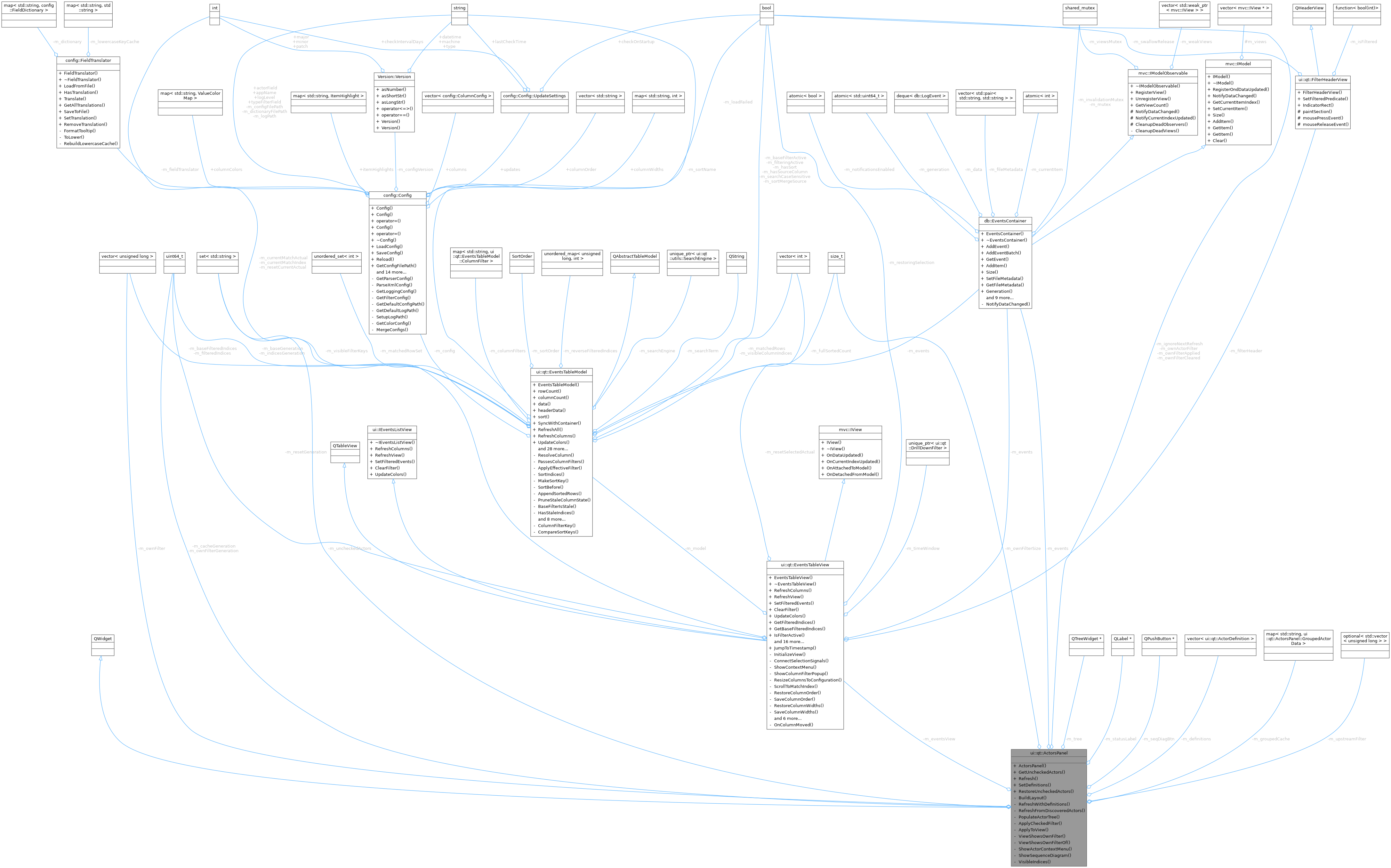
Panel showing aggregate statistics per "actor" in the visible event set. More...
#include <ActorsPanel.hpp>
Classes | |
| struct | ActorData |
| Per-actor statistics accumulated during a Refresh pass. More... | |
| struct | GroupedActorData |
Public Slots | |
| void | Refresh () |
| Recompute actor statistics from the current visible row set. | |
| void | SetDefinitions (const std::vector< ActorDefinition > &defs) |
| Set actor definitions and refresh the tree. | |
| void | RestoreUncheckedActors (const std::set< std::string > &unchecked) |
| Restore the set of unchecked actors from a saved filter. | |
Signals | |
| void | ActorDirectionChanged (const QString &defName, const QString &actorName, bool isSubActor, const QString &newTarget) |
Public Member Functions | |
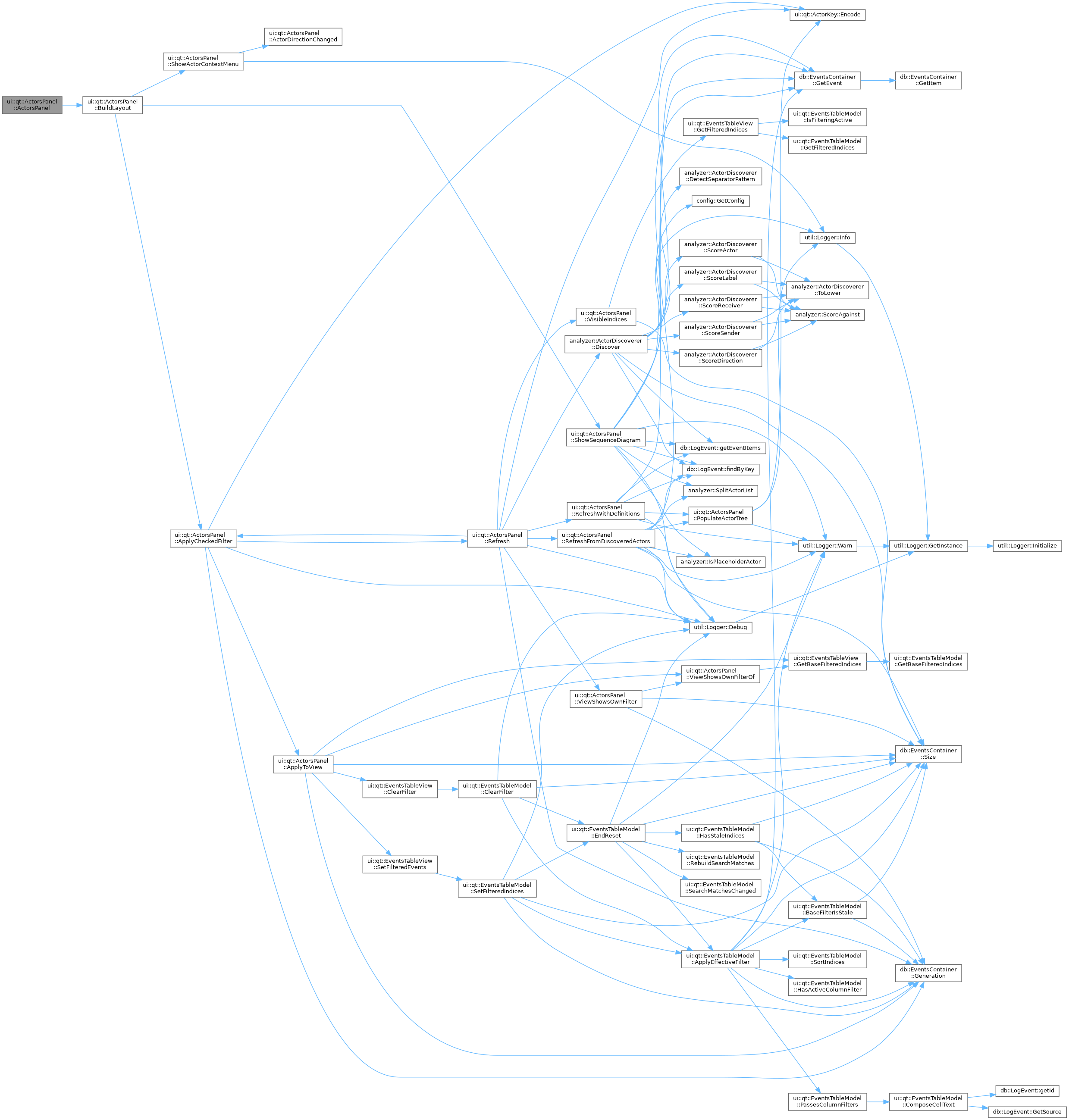
| ActorsPanel (db::EventsContainer &events, EventsTableView *eventsView, QWidget *parent=nullptr) | |
| std::set< std::string > | GetUncheckedActors () const |
| Get the set of currently unchecked actors (for filter persistence). | |
Private Types | |
| using | GroupData = GroupedActorData |
| Alias used in the sequence-diagram lambda capture. | |
Private Member Functions | |
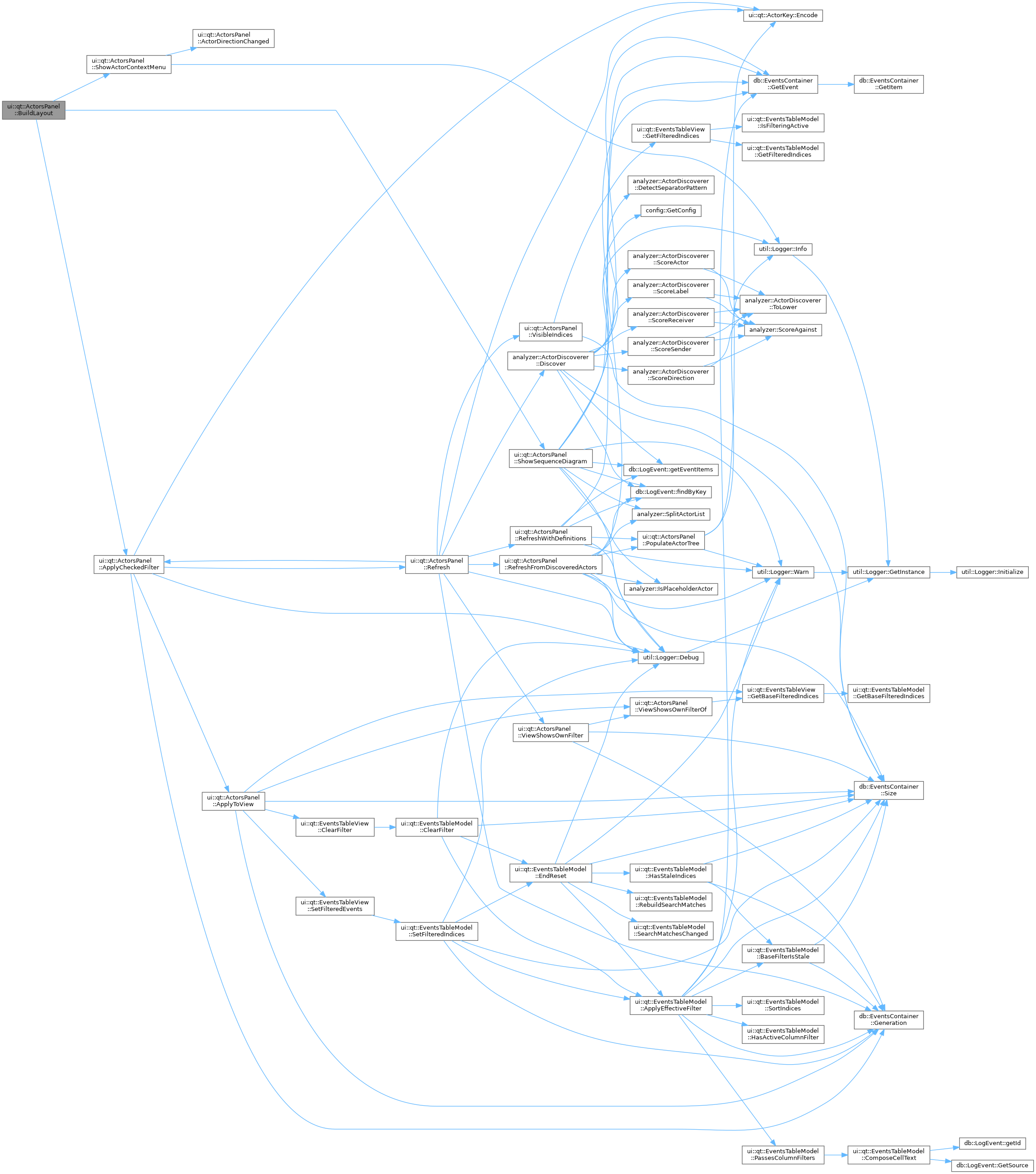
| void | BuildLayout () |
| void | RefreshWithDefinitions (const std::vector< unsigned long > &vis) |
| void | RefreshFromDiscoveredActors (const analyzer::ActorDiscoveryResult &discovered, const std::vector< unsigned long > &vis) |
| void | PopulateActorTree (size_t totalVisible) |
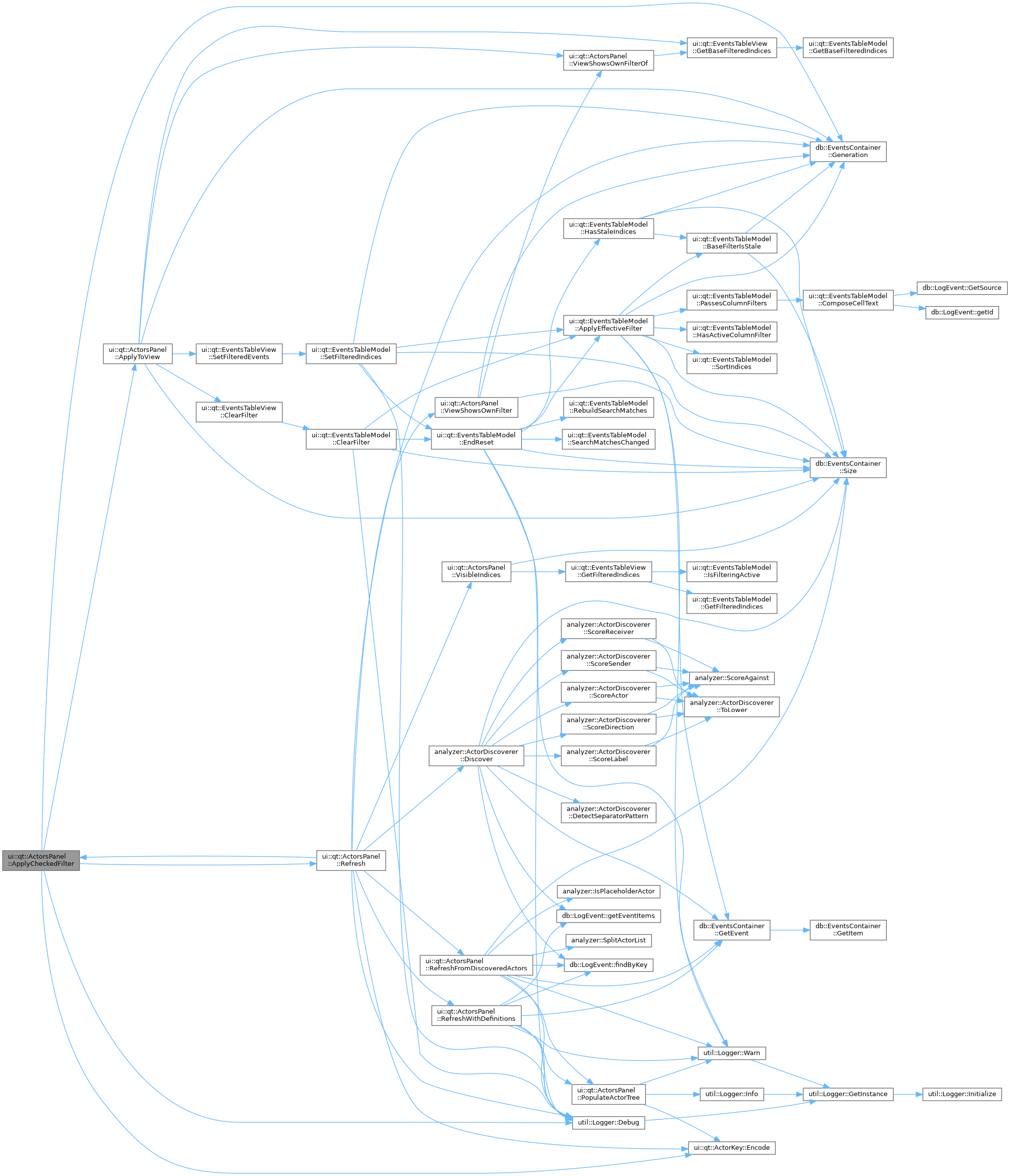
| void | ApplyCheckedFilter () |
| void | ApplyToView (const std::vector< unsigned long > *indices) |
| bool | ViewShowsOwnFilter () const |
| bool | ViewShowsOwnFilterOf (std::uint64_t generation) const |
| Like ViewShowsOwnFilter(), but events appended since do not count. | |
| void | ShowActorContextMenu (const QPoint &pos) |
| void | ShowSequenceDiagram () |
| std::vector< unsigned long > | VisibleIndices () const |
Private Attributes | |
| db::EventsContainer & | m_events |
| EventsTableView * | m_eventsView |
| QTreeWidget * | m_tree {nullptr} |
| QLabel * | m_statusLabel {nullptr} |
| QPushButton * | m_seqDiagBtn {nullptr} |
| std::vector< ActorDefinition > | m_definitions |
| std::map< std::string, GroupedActorData > | m_groupedCache |
| std::set< std::string > | m_uncheckedActors |
| bool | m_ignoreNextRefresh {false} |
| std::uint64_t | m_cacheGeneration {0} |
| bool | m_ownFilterCleared {false} |
| std::vector< unsigned long > | m_ownFilter |
| std::size_t | m_ownFilterSize {0} |
| std::uint64_t | m_ownFilterGeneration {0} |
| bool | m_ownFilterApplied {false} |
| bool | m_ownActorFilter {false} |
| The last ApplyToView() set an actor filter (not "no actor filter"). | |
| std::optional< std::vector< unsigned long > > | m_upstreamFilter |
| The filter that was set before the actor filter (none: no filter). | |
Detailed Description
Panel showing aggregate statistics per "actor" in the visible event set.
An actor is any field value (e.g. user, IP, process ID) that can be used to identify who performed an action. The panel organises actors by their ActorDefinition, showing hierarchical data with counts, types, and timestamps.
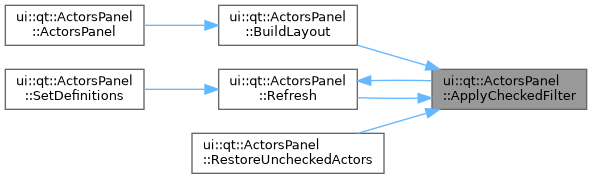
Clicking a checkbox on a row filters the events view to show only events from the selected actors. Multiple actors can be selected.
Refreshes automatically via a modelReset connection wired up in MainWindow.
Member Typedef Documentation
◆ GroupData
|
private |
Alias used in the sequence-diagram lambda capture.
Constructor & Destructor Documentation
◆ ActorsPanel()
|
explicit |
Member Function Documentation
◆ ActorDirectionChanged
|
signal |
Emitted when the user changes the actor direction in a context menu. Arguments: (definition name, actor name, isSubActor, new target actor name)

◆ ApplyCheckedFilter()
|
private |
◆ ApplyToView()
|
private |
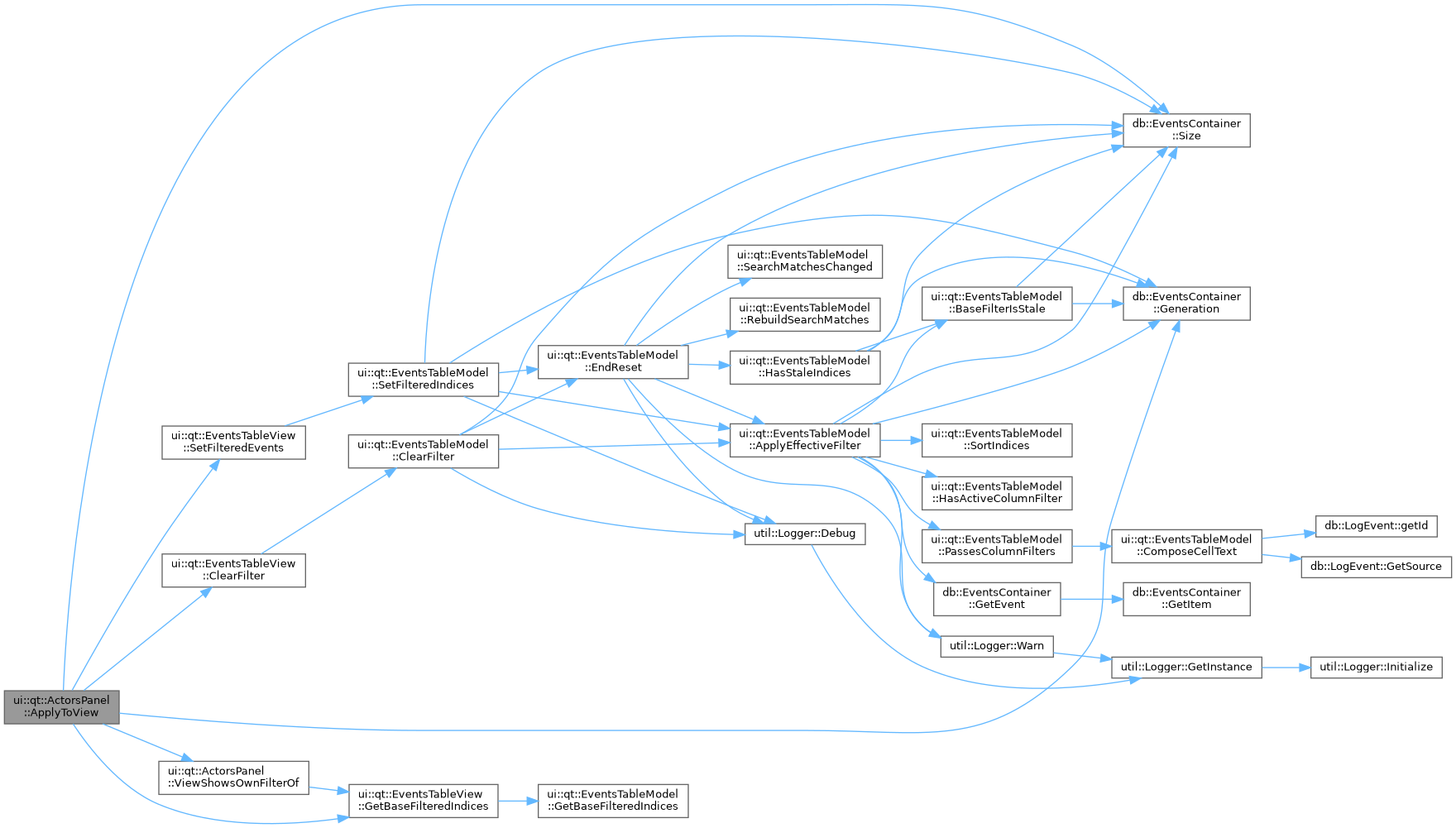
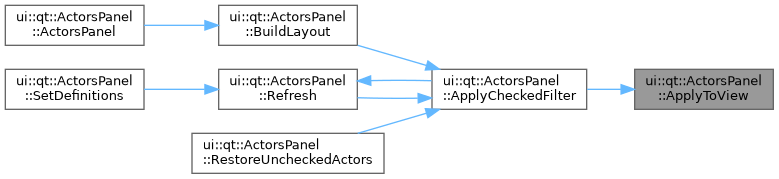
Passes the actor filter to the events view (nullptr clears it) and remembers it, so the refresh caused by it can be told apart.
◆ BuildLayout()
|
private |

◆ GetUncheckedActors()
|
inline |
Get the set of currently unchecked actors (for filter persistence).
◆ PopulateActorTree()
|
private |


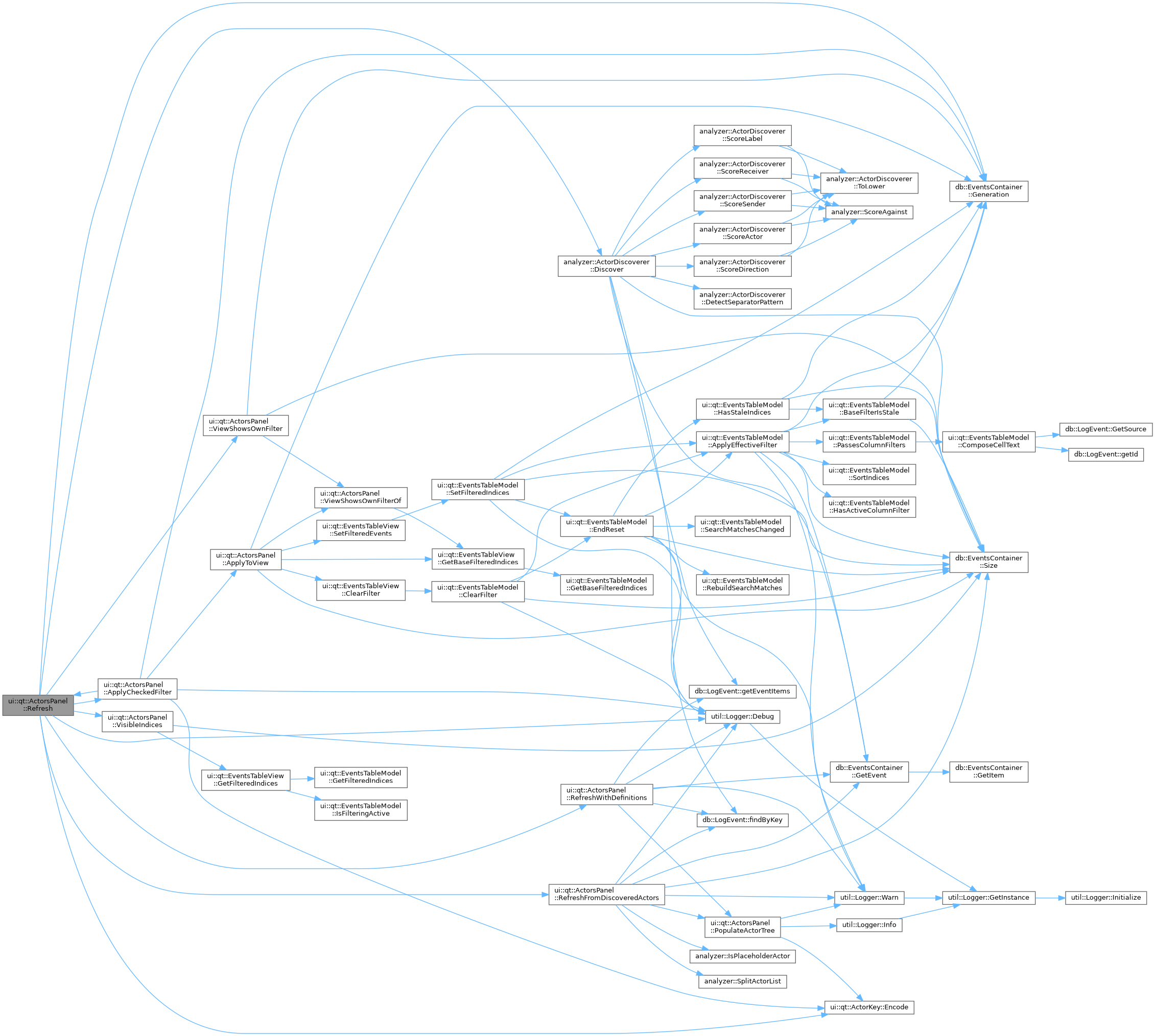
◆ Refresh
|
slot |
Recompute actor statistics from the current visible row set.

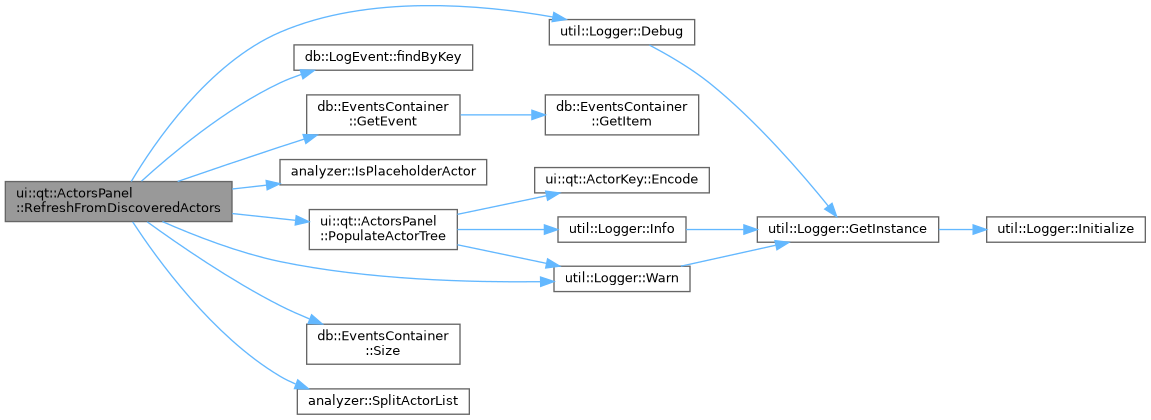
◆ RefreshFromDiscoveredActors()
|
private |

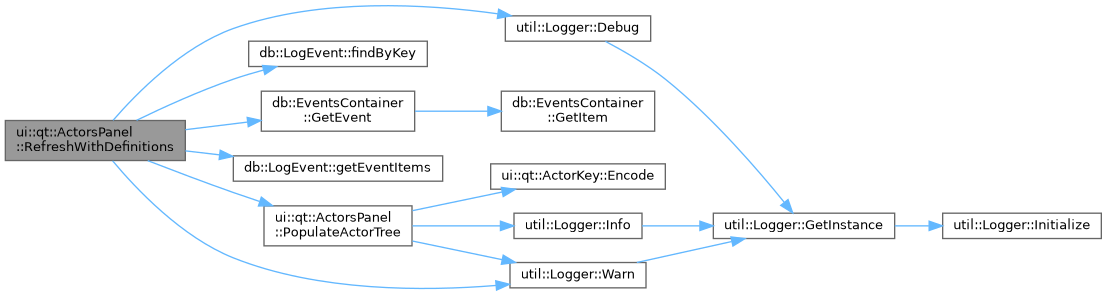
◆ RefreshWithDefinitions()
|
private |

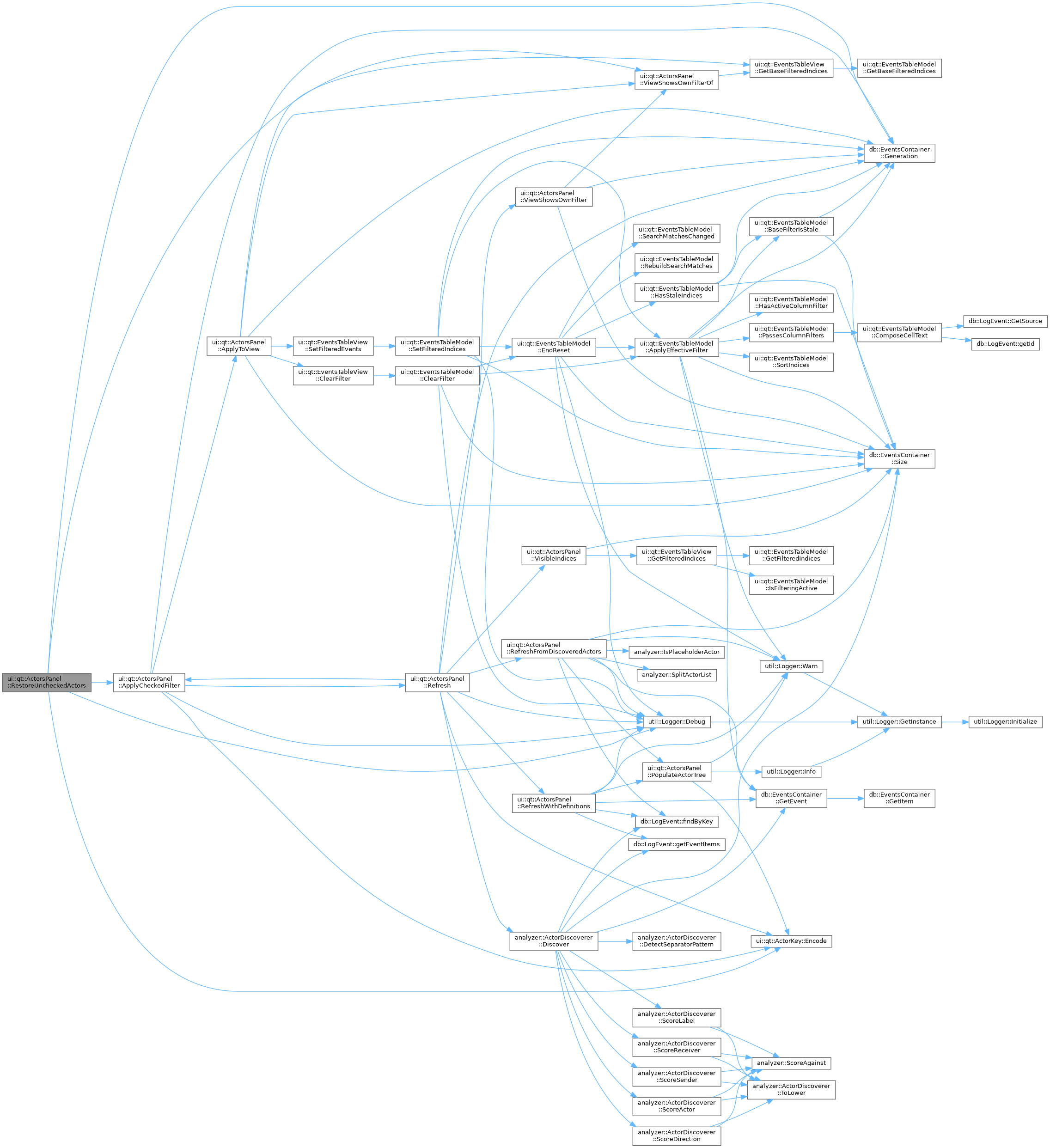
◆ RestoreUncheckedActors
|
slot |
Restore the set of unchecked actors from a saved filter.
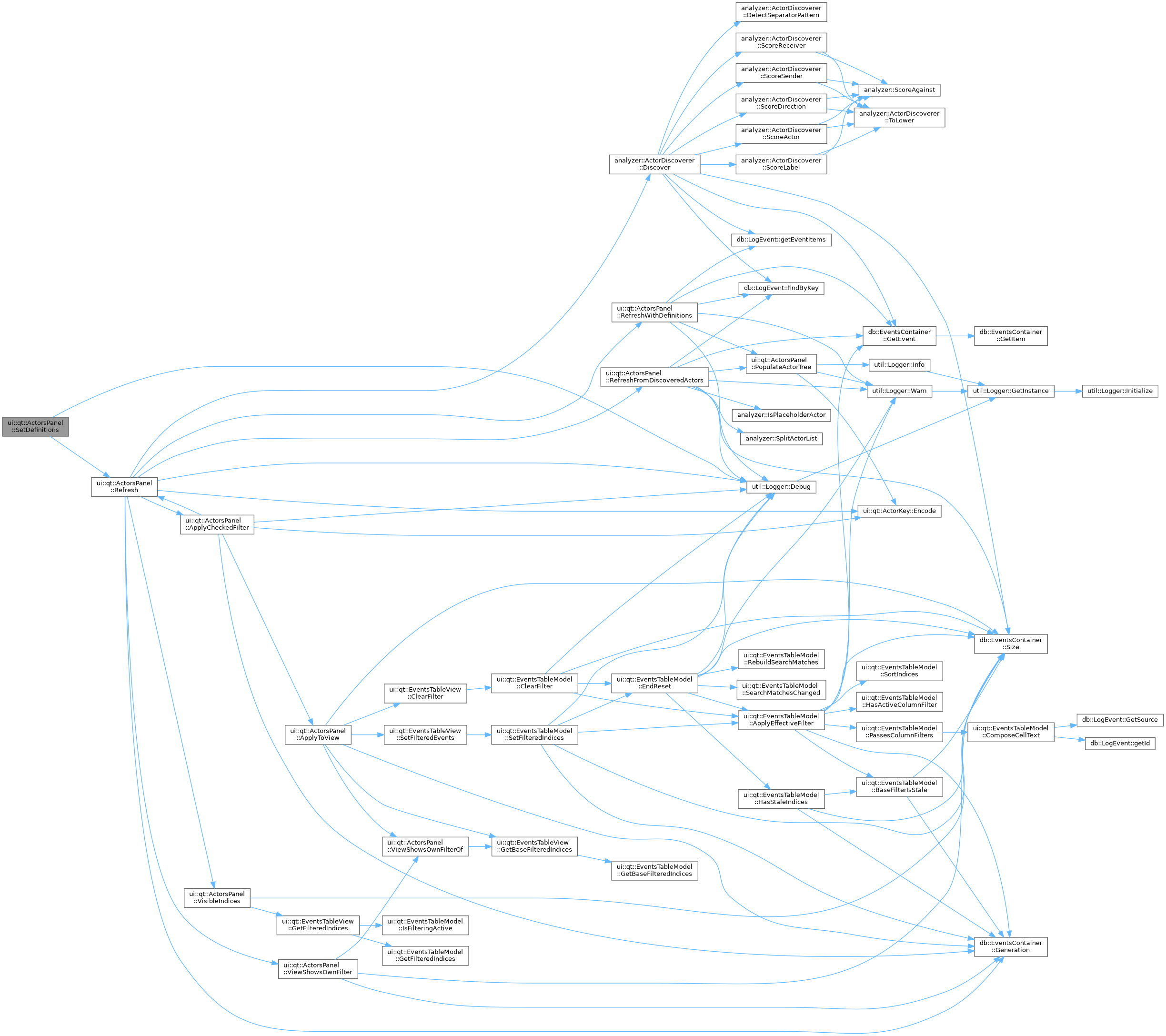
◆ SetDefinitions
|
slot |
Set actor definitions and refresh the tree.
◆ ShowActorContextMenu()
|
private |


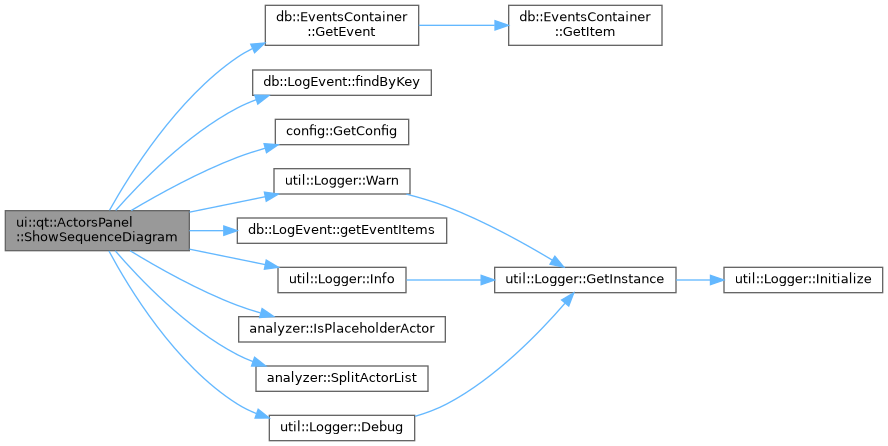
◆ ShowSequenceDiagram()
|
private |

◆ ViewShowsOwnFilter()
|
private |
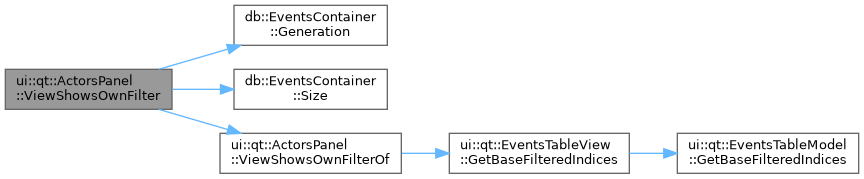
True while the events view still shows exactly the filter of the last ApplyToView() on the same data.

◆ ViewShowsOwnFilterOf()
|
private |
Like ViewShowsOwnFilter(), but events appended since do not count.


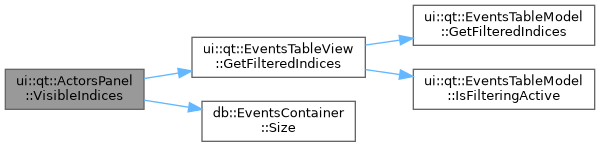
◆ VisibleIndices()
|
private |

Member Data Documentation
◆ m_cacheGeneration
|
private |
Container generation m_groupedCache was built for (indices are stale once the container is cleared or merged).
◆ m_definitions
|
private |
◆ m_events
|
private |
◆ m_eventsView
|
private |
◆ m_groupedCache
|
private |
◆ m_ignoreNextRefresh
|
private |
◆ m_ownActorFilter
|
private |
The last ApplyToView() set an actor filter (not "no actor filter").
◆ m_ownFilter
|
private |
◆ m_ownFilterApplied
|
private |
◆ m_ownFilterCleared
|
private |
◆ m_ownFilterGeneration
|
private |
◆ m_ownFilterSize
|
private |
◆ m_seqDiagBtn
|
private |
◆ m_statusLabel
|
private |
◆ m_tree
|
private |
◆ m_uncheckedActors
|
private |
◆ m_upstreamFilter
|
private |
The filter that was set before the actor filter (none: no filter).
The documentation for this class was generated from the following files:
- src/application/ui/qt/panels/ActorsPanel.hpp
- src/application/ui/qt/panels/ActorsPanel.cpp